


Speed is only part of the answer. A reliable live betting site does three things well during a match: it updates odds quickly, it accepts bets without endless rejections, and it stays online when traffic peaks in the last overs or the final minutes. It also explains, in plain rules, when markets close and how bets settle. This checklist breaks those qualities into things you can test yourself with small stakes, so you can judge a site on evidence rather than on its advertising.
Quick answer
- Odds should change within a few seconds of a boundary, wicket or goal.
- In calm passages of play, most bets should be accepted at the price you clicked.
- The site should stay online and responsive in the busiest moments of big matches.
- Suspension and settlement rules should be published and easy to find.
- Test any site during one live match with small stakes before you rely on it.
Why reliability matters more in live betting
Before a match, prices change slowly. You can take your time, compare sites and place a bet at leisure. Live betting is different: in cricket the price can move on every ball, and in football one attack can change a market. A site that is slow to update, rejects bets at random or freezes in the final overs costs you money even when your reading of the game is right.
Reliability is not the same as having the most markets. A short list of live markets that update correctly is worth more than a long list that lags.
Six checks for a reliable live betting site
Each check below is something you can see for yourself during a match.
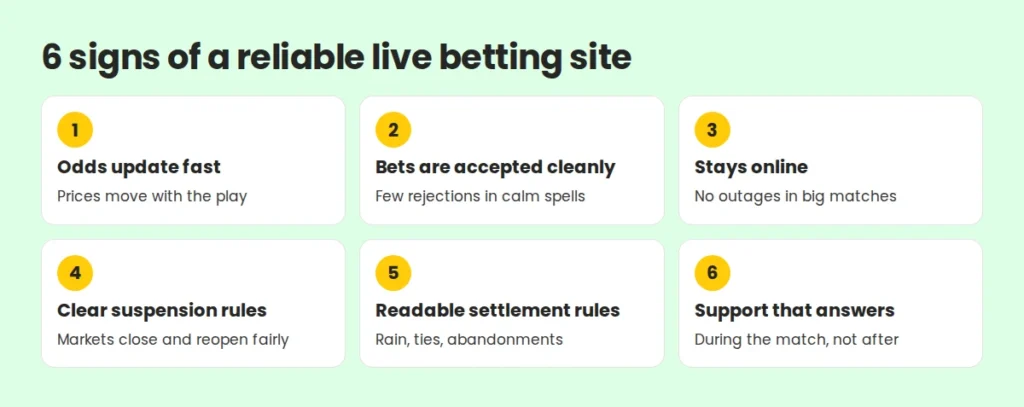
1. Odds speed: how quickly prices follow the play
Every live price depends on a data feed that tells the site what has just happened. The delay between the event and the updated price is called latency. Lower latency means the odds you see are closer to the real state of the match.
To check odds speed, watch a market during a live match and note how long the price takes to change after a boundary, wicket, goal or card. A gap of a couple of seconds is normal. If the price regularly lags well behind a free television broadcast, the feed or the site is slow.
2. Bet acceptance: does your bet go through?
Most live betting sites hold a bet for a few seconds before accepting it. This short delay protects the site from people betting on events that have already happened but are not yet in the price. It is normal, and the site’s rules should mention it.
What is not normal is frequent rejection when nothing is happening. If bets fail or are repriced during a quiet over or a slow spell of midfield possession, something is wrong with the site’s setup. A reliable site rejects bets mainly around big moments: a wicket, a review, a penalty or a goal check.
3. Uptime: does the site stay online in big moments?
The busiest minutes for any live betting site are the last overs of a close IPL chase or the final minutes of a big football match. That is exactly when a weak site slows, logs users out or shows error messages. Uptime is simply the share of time a service is available, and you notice it most when you need it.
You cannot see a site’s server logs, but you can see the symptoms: pages that freeze, a bet slip that spins and never confirms, or a balance that does not update. One bad night can happen anywhere. A pattern across several big matches is a reason to move on.
4. Suspension rules: how markets close and reopen
Markets are suspended when something important happens or might happen: a wicket, an appeal, a third-umpire review under the ICC playing conditions, a penalty, a VAR check or a red card. A reliable site suspends quickly and reopens quickly once the outcome is known.
The rules should say what happens to a bet placed just before a suspension, and whether bets placed after an event that was not yet in the price can be voided. Read that section before you bet live.
5. Settlement rules you can read in a minute
Live bets need clear settlement rules for rain, reduced overs, ties, abandoned matches and extra time. A reliable site publishes these in plain language and applies them consistently. If you cannot find the rule for a rain-shortened cricket match, ask support before you bet, not after.
6. Support that answers during the match
A live bet is settled in minutes. Support that replies the next day cannot help with a stuck bet slip in the eighteenth over. Before you deposit, send a simple question to support during a live match and time the reply.
How to test a site yourself
You can test reliability during one match with a small budget.
- Pick a match you would watch anyway and keep a free broadcast or scorecard open.
- Place five to ten small bets during quiet spells and note how many are accepted at the price you clicked.
- After a boundary, wicket or goal, time how long the price takes to change.
- Note how quickly markets reopen after a suspension.
- Write down any freezes, logouts or slow balance updates.
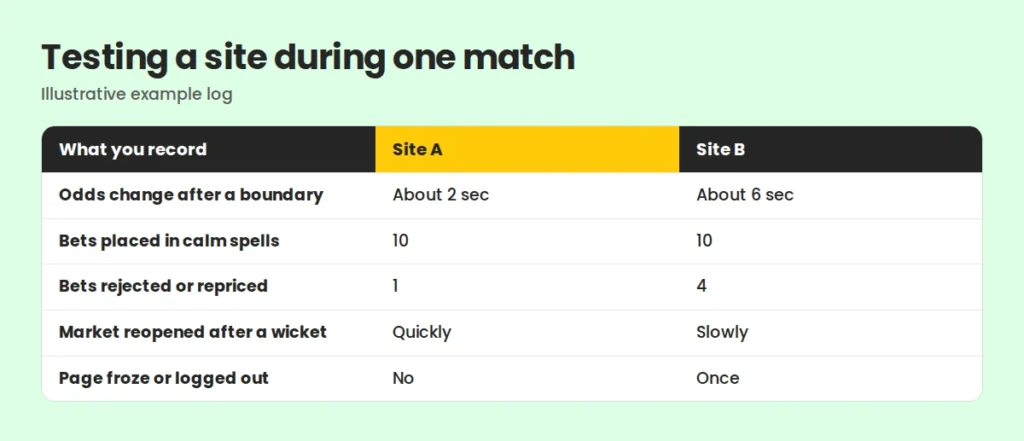
Compare two or three sites this way over a couple of matches. The numbers above are an illustrative example of what a simple log might look like; your own results are what count.
Where this leaves you
A site that passes these checks is worth a closer look. Sites in the same group can share feeds and systems, so judge each one on its own record rather than on its name. Winfix publishes its rules and payment pages, and the same tests apply on AutoExch, another platform from the same group. Our guide to the best live betting platform in India lists further points to compare. Players sometimes search for names such as Vikranth Exchange or vikranthexch and land on copycat pages, so always start from the official address you have saved.
Mistakes when judging a live betting site
- Counting markets instead of testing them. A long market list says nothing about speed.
- Judging on one match. Any site can have a bad night; look for patterns.
- Ignoring the rules page. Suspension and void rules decide disputes.
- Testing with large stakes. Small stakes give you the same information for less risk.
- Chasing every price change. A fast site still needs a budget and limits.
FAQ
What makes a live betting site reliable?
Fast odds updates, clean bet acceptance during calm play, steady uptime in big matches, clear suspension and settlement rules, and support that answers during the match.
Why are my live bets rejected so often?
Most sites hold live bets for a few seconds and reject or reprice them if the odds change in that time. Frequent rejections during quiet spells suggest a slow feed or a strict setup.
How fast should live odds update?
Within a few seconds of a key event such as a boundary, wicket or goal. Prices that lag well behind a free broadcast suggest a slow data feed.
Is a site with more live markets more reliable?
Not necessarily. Reliability is about speed, acceptance and uptime. A smaller set of markets that update correctly is better than a large set that lags.
How can I test a live betting site safely?
Use small stakes during one match, keep a broadcast or scorecard open, and record update speed, accepted bets, suspensions and any freezes. Compare two or three sites before choosing.
Before you play
Betting and real-money games are for adults aged 18 and over. Set a budget you can afford to lose, and use deposit limits and time-outs if you play more than you planned. India’s Promotion and Regulation of Online Gaming Act, 2025 and its 2026 rules affect real-money online games, and state laws differ, so check the laws that apply where you live.